Virtual Staging Cost Breakdown: Per Room, Subscription & Pro
Use this virtual staging cost breakdown: per room, subscription & pro services, with real 2026 pricing so agents pick the right model.
Last month I sat down with a new agent on my team who had just picked up three vacant listings in the same week. She pulled up five different virtual staging websites and asked me: “Which one should I use? One says $0.09 per image, another says $30, and this third one wants $79 a month. What’s the difference?”
That conversation is happening in brokerages every day. The virtual staging market in 2026 has split into three clear pricing models — per-room/per-image, monthly subscription, and professional human-edited services — and picking the wrong one for your volume either wastes money on unused credits or leaves you with staging that looks fake to buyers.
The Three Virtual Staging Pricing Models
Before diving into specific numbers, you need to understand which model fits your business. Each has a break-even point where it becomes cheaper or more expensive than the others.
Per-Room / Per-Image Pricing
This is the most straightforward model. You pay for exactly what you stage — no monthly commitment, no unused credits.
Pricing ranges dramatically by provider type:
- AI-powered platforms (entry-level): $0.09–$1.00 per image. Tools like ListingScene operate at the low end, while mid-tier AI services sit closer to $1. VirtualStagingAI credit packs cost $14.99 for 100 credits ($0.15/credit), with 1 credit per proof, 3 per standard export, and 5 per HD export.
- AI with human review: $7–$15 per image. Apply Design falls into this range, using AI for the initial render but having a human designer verify and adjust the output.
- Fully human-edited: $23–$75 per image. BoxBrownie charges $24/image, Stuccco charges $23–$29/image, and roOomy charges $29–$39/image with 3D modeling.
The per-image model works best when you stage fewer than 2 listings a month. At that volume, even $30/image means $150–$240 per listing — still a fraction of physical staging, and no recurring fee.
Monthly Subscription Pricing
Subscription plans bundle a fixed number of staging credits each month for a flat fee. The per-image cost drops, but you need consistent volume to avoid wasting credits that don’t roll over.
Here’s how the major subscription tiers compare:
| Platform | Monthly Price | Images/Month | Cost Per Image | Best For |
|---|---|---|---|---|
| VirtualStagingAI (Starter) | $9.99/mo | 100 credits | $0.10–0.50 | 2–4 listings/month |
| VirtualStagingAI (Pro) | $29.99/mo | 500 credits | $0.06–0.30 | 5–15 listings/month |
| ListingScene (Pro) | $8.99/mo | ~100 images | $0.09 | High volume / budget focus |
| Virtual Staging AI | $39–$199/mo | Varies by tier | ~$0.28–$1.00 | Team/agency use |
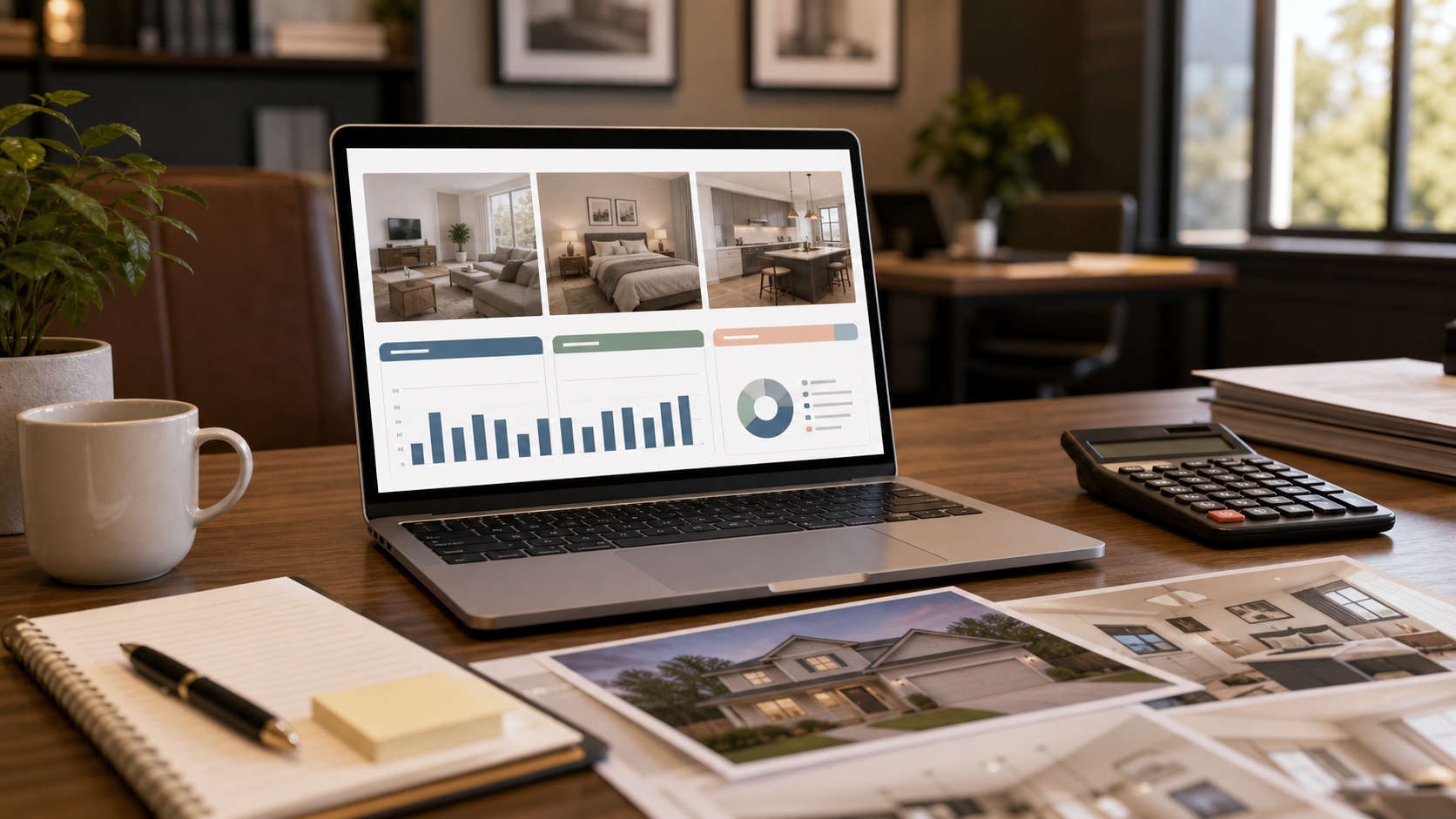
A critical detail with subscription plans: unused credits typically expire at the end of each billing cycle. If you buy a Starter plan and only stage one room, the remaining credits don’t carry forward. This makes subscriptions a bad deal for agents with unpredictable listing volume.
Professional Human-Edited Virtual Staging
This category bridges AI and traditional interior design. A human designer opens your photo in Photoshop or 3D staging software, manually places furniture renders, adjusts lighting and shadows, and delivers a polished image.
A 2026 survey by the National Association of Realtors found that agents using professional-grade staging (whether physical or high-end virtual) reported higher buyer engagement on listing pages. The trade-off is turnaround time — 24 to 48 hours versus the near-instant output of AI tools.
Human-edited services make sense when the property is in the luxury segment ($1M+) or the listing photos have challenging angles, mixed lighting conditions, or partially furnished rooms that confuse AI algorithms.
Cost Comparison: Staging an 8-Room Listing
Let’s walk through what you’d actually pay to stage a standard 3-bedroom, 2-bath home with a living room, kitchen, and dining area — 8 total rooms — across each pricing model.
| Method | 8-Room Cost | Turnaround | Revisions | Annual (24 listings) |
|---|---|---|---|---|
| Physical Staging | $3,000–$6,000 | 3–7 days | New contract | $72,000–$144,000 |
| BoxBrownie ($24/img) | $192 | 24–48 hrs | 1–2 included | $4,608 |
| Stuccco ($26/img avg) | $208 | 24–48 hrs | Unlimited | $4,992 |
| VirtualStagingAI (Starter @ $9.99/mo) | $9.99 (covers entire listing) | ~15 sec/image | Unlimited (re-stage) | $119.88 |
| VirtualStagingAI (Pro @ $29.99/mo) | $29.99 (covers multiple listings) | ~15 sec/image | Unlimited (re-stage) | $359.88 |
| ListingScene ($0.09/img) | $0.72 | ~10 sec/image | Re-generate | $17.28 |
A few things stand out in this table. The annual cost of physical staging for 24 listings — $72,000 or more — could pay for an entry-level salary. Even the most expensive human-edited virtual staging option ($4,608/year) costs less than one month of furniture rental extensions on a single physical staging contract.
Per-Room Pricing: Which Rooms Matter Most
You don’t need to stage every room. According to NAR’s 2025 Profile of Home Staging, buyers’ agents consistently rank three rooms as most important for staging: the living room (37%), primary bedroom (34%), and kitchen (23%). Bathrooms, dining rooms, and secondary bedrooms receive far less attention from buyers viewing photos online.
If you’re on a tight budget, stage those three rooms first. With a per-image AI tool at $0.15–$1.00 per room, you’re looking at $0.45–$3.00 for the rooms that actually move the needle. On a $400,000 listing, even a 1% price lift from better marketing — $4,000 — delivers a 1,300x return on a $3 staging investment.
This is where AI virtual staging creates leverage that human-edited services can’t match. When the per-room cost is under a dollar, the question shifts from “which rooms can I afford to stage” to “is there any room I shouldn’t stage.”
Flat-Fee vs Subscription: The Break-Even Point
The decision between paying per image and subscribing comes down to a simple break-even calculation.
If you use a subscription like VirtualStagingAI Starter at $9.99/month (100 credits), and you stage 8 rooms per listing at 1 credit each for proofs, you can stage roughly 12 listings worth of proofs before running out. That’s $0.83 per listing. Compare that to buying a $14.99 credit pack (100 credits) each time — you’d need to stage at least 8 rooms per month for the subscription to beat pay-per-use pricing.
For the Pro plan at $29.99 (500 credits), the math is even simpler: if you list 5 or more properties per month, the subscription pays for itself within the first listing. If you list fewer than 3, stick with credit packs.
Here’s a quick decision framework based on your monthly listing volume:
- 1–2 listings/month: Credit packs or per-image pricing. No subscription needed.
- 3–4 listings/month: Starter-level subscription ($9.99–$19.99/mo) makes sense. You’ll use most of the credits.
- 5–15 listings/month: Pro-level subscription ($29.99/mo). The per-image cost drops below $0.10.
- 15+ listings/month or team/brokerage: Enterprise or highest-tier subscription. At this volume, even human-edited services become negotiable on bulk pricing.
Hidden Costs Buyers Miss
Every pricing page shows the sticker price. The costs that catch agents off guard come later.
Credit expiration. Nearly all subscription-based AI staging platforms operate on a use-it-or-lose-it model. Credits do not roll over. If you subscribe to a 100-credit plan and stage nothing in a slow month, you paid $9.99 for nothing.
Quality tier jumps. Most platforms use a tiered credit system where proof-level output costs 1 credit, but standard or HD export costs 3–5 credits. If you proof 10 rooms and export 5 at standard quality, that’s 10 + 15 = 25 credits — not 10.
Revision and re-stage fees. Human-edited services typically include 1–2 free revisions. Additional changes cost $5–$25 each. If you’re particular about furniture placement or style, those revision costs accumulate. AI platforms generally let you re-stage unlimited times at the same credit cost.
Platform-specific furniture limitations. Some budget AI tools offer 2–3 preset styles with limited furniture variety. If you need specific styles — mid-century modern, coastal, Art Deco — you’ll pay more or need a higher-tier plan. VirtualStagingAI’s style gallery includes 10+ styles across multiple room types, which matters when you’re presenting to sellers with specific design preferences.
MLS compliance disclosures. While not a direct platform cost, failing to properly disclose virtual staging in your MLS listing has consequences. The NAR MLS policy requires clear labeling of virtually staged photos, and some platforms charge extra for compliance watermarking or metadata tagging.
What 127 Agents Actually Paid: Survey Data
A 2025 survey of 127 active real estate agents published by AI Real Estate Rocket found that actual spending patterns differed from platform-advertised pricing:
- 38% of agents spent under $50/month on virtual staging
- 31% spent $50–$150/month
- 22% spent $150–$300/month
- 9% spent over $300/month (typically teams or brokerages with in-house marketing staff)
The agents spending under $50/month almost exclusively used AI-powered platforms with subscription or bulk credit models. Those in the $150–$300 range often mixed AI staging for most rooms with human-edited services for primary living areas and exterior shots.
The Physical Staging Baseline: Why the Comparison Matters
When weighing per-room, subscription, and pro virtual staging costs, the right benchmark isn’t another virtual staging platform — it’s physical staging.
Physical staging in 2026, according to HomeGuide, averages $2,000–$5,000 per home. A partial stage (3 rooms) averages $1,775 nationally. Monthly furniture rental extensions cost $500–$1,500. For a listing that sits 60 days, the total can cross $7,000.
Virtual staging’s cost advantage isn’t just in the sticker price. It eliminates scheduling logistics (no delivery windows, no installation appointments), carries zero damage liability, allows instant style changes without re-contracting, and produces permanent images you can reuse in social media, email campaigns, and print materials.
For more on how the two approaches compare beyond cost, see our full breakdown of virtual staging vs real staging.
How to Pick the Right Pricing Model This Week

If you’re evaluating virtual staging pricing right now, here’s the practical path:
- Count your average monthly listings. Be honest. If it’s 2 or fewer, credit packs win. If it’s 4+, subscription wins.
- Check which rooms actually need staging. Three rooms (living, primary bedroom, kitchen) cover the majority of buyer attention. Don’t pay to stage the laundry room.
- Compare credit consumption realistically. A proof-first workflow — generate proofs for all rooms, then export only the ones that pass review — stretches your credits further than exporting every room at HD quality.
- Account for style variety. If your market has diverse buyer demographics (young families, downsizers, luxury buyers), you need a platform with enough style options to tailor each listing.
VirtualStagingAI’s pricing starts with 5 free credits so you can test the proofing workflow before spending anything. The Starter plan at $9.99/month covers most solo agents, and the Pro plan at $29.99/month handles high-volume teams.
For new agents running their first few virtual staging projects, the free tier plus a $14.99 credit pack is the lowest-risk entry point. You get 105 total credits — enough to proof 10 rooms at 3 styles each and still have credits left for standard exports of your best shots. Once you establish your monthly listing rhythm, switch to the subscription tier that matches your volume.
Quick FAQ Before You Buy
How much does virtual staging cost per room in 2026?
AI virtual staging costs $0.09–$1.00 per room depending on the platform and quality tier. Human-edited virtual staging costs $23–$75 per room. For example, VirtualStagingAI uses credit-based pricing where a proof costs 1 credit, a standard export costs 3 credits, and an HD export costs 5 credits.
Is an AI virtual staging subscription worth it?
An AI virtual staging subscription is worth it if you stage 3 or more listings per month. At that volume, the per-image cost under a $9.99–$29.99 monthly plan is lower than buying individual credit packs. For agents with 1–2 monthly listings, pay-per-use credit packs are usually safer because subscription credits can expire.
When should I choose per room virtual staging?
Choose per room virtual staging when listing volume is unpredictable or you only need to stage the living room, primary bedroom, and kitchen. That keeps costs tied to actual usage instead of forcing a monthly plan before you know your listing rhythm.
What is the virtual staging vs physical staging cost difference?
The virtual staging vs physical staging cost gap is the main reason agents test digital staging first. Physical staging often runs $2,000–$5,000 per listing before rental extensions. A virtual 8-room job can range from under $1 with budget AI tools to about $200 with human-edited services.
Which rooms should I stage if I’m on a tight budget?
Focus on the three rooms buyers notice most: the living room, primary bedroom, and kitchen. Staging those first gives you the strongest photo impact without paying for secondary rooms that rarely change buyer intent.